Basic Information
| Field | Details |
|---|---|
| Name | Rodrigo de Borja y Doms |
| Also Known As | Rodrigo Borgia, Pope Alexander VI |
| Born | 1431 |
| Birthplace | Xàtiva near Valencia |
| Died | 1503 |
| Position | Pope of the Catholic Church |
| Papal Reign | 1492 to 1503 |
| Family Line | House of Borja, later known as the Borgias |
| Known For | Political power, family promotion, wealth, papal patronage, and controversy |
The Rise of Borgia Pope
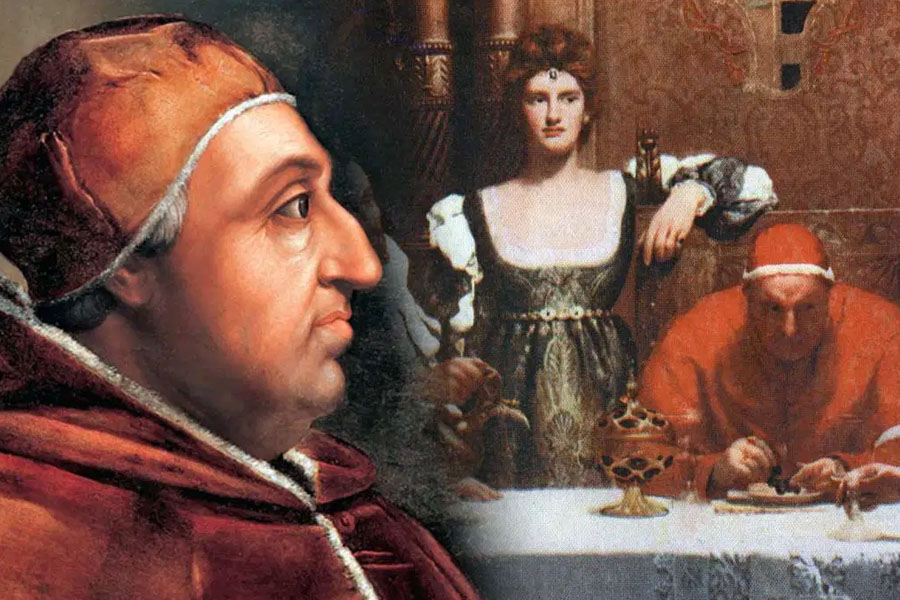
I imagine Borgia Pope as a cathedral-floor chess player, one of the most spectacular individuals in church history. He was born Rodrigo de Borja in 1431 and ascended from an aristocratic Spanish family to become a key European figure. Pope Calixtus III, Rodrigo’s uncle, helped him succeed, but he did more. He studied law, gained authority, learned church administration, and became a force that could change institutions and people.
When he became pope in 1492, Rodrigo Borgia was an experienced operator. As Vice-Chancellor of the Roman Church and cardinal for decades, he was close to power, money, and diplomacy. The papal machine was controlled from that office. He learnt to manipulate politics, favor allies, and defend his position there. After becoming Pope Alexander VI, he was not a quiet spiritual figure. He was a king driven by ambition.
A Pope of Power, Wealth, and Strategy
Borgia Pope was remembered for more than prayer and ceremony. He was a political architect. During his papacy, he worked to strengthen papal finances, protect church interests, and shape the balance of power in Italy and beyond. He also played a part in the colonial age by issuing bulls that influenced how Spain and Portugal divided the non-European world after Columbus’s voyages.
His reign was full of pageantry and pressure. He supported art, restoration projects, and the splendor of Rome. He helped make the Jubilee of 1500 memorable, and he left a mark on the Vatican itself through patronage and building efforts. To me, his papacy feels like a bright gilded mask over a hard iron frame. The surface shimmered. The machinery underneath was political, personal, and relentless.
He was also widely viewed as wealthy, careful with patronage, and skilled at turning offices into influence. Exact net worth figures do not survive in a modern sense, but the historical record makes one thing clear: he was one of the richest men of his age. Wealth, in his world, was not just comfort. It was leverage.
Family Members Who Shaped the Borgia Story
The family surrounding Borgia Pope is as important as the man himself. I cannot separate his story from theirs, because the family was both his strength and his legacy.
His Parents
His father was Jofré Llançol i Escrivà and his mother was Isabel de Borja y Cavanilles. Through his mother, he belonged to the Borja family, the line that would become famous across Europe. That family identity mattered deeply. It gave him not only a name but a route into influence.
His Uncle, Pope Calixtus III
The most important family figure in his rise was Alonso de Borja, later Pope Calixtus III. This uncle was the launch point for Rodrigo’s career. He helped open the door to church advancement, and once that door opened, Rodrigo moved fast through it. In the Borgia story, Calixtus III is the first great flame, and Rodrigo is the fire that spread after it.
His Brother
His brother was Pedro. The historical record gives far less detail about him than about Rodrigo or the pope’s children, but he remains part of the family structure behind the papal rise.
His Partner and the Mother of His Children
Rodrigo’s most important long-term partner was Vannozza dei Cattanei. She was the mother of his publicly acknowledged children. Their relationship stands at the center of the Borgia family drama. It connected papal power with dynastic ambition, and it produced the children who would later carry the Borgia name into politics, marriage alliances, and legend.
His Children
Borgia Pope publicly acknowledged four children with Vannozza:
Juan, also called Giovanni
Juan was one of the pope’s sons and was later murdered in 1497. His death shook the family and intensified the dark aura around the Borgias.
Cesare Borgia
Cesare is the most famous son. He became the family’s political and military weapon, a man of sharp intelligence and ruthless will. He is often remembered as the figure who inspired Machiavelli’s reflections on power. If Rodrigo was the hand, Cesare was the sword.
Lucrezia Borgia
Lucrezia is one of the most famous women of the Renaissance. She married into powerful noble families and became a central figure in court politics. I see her as the calm center of a storm, a woman repeatedly pulled into dynastic planning and public suspicion, yet still able to shape her own role in history.
Gioffre, also called Jofré
Jofré was the youngest of the four and was linked by marriage into Aragonese nobility. He is less famous than Cesare or Lucrezia, but he still helped extend the family’s political reach.
His Grandchildren
The Borgia line continued through Lucrezia. Among her descendants were Ercole II d’Este, who later became Duke of Ferrara, and Rodrigo of Aragon. These descendants show how the family’s influence did not end with the papacy. It spread like roots under stone, reaching into later noble houses.
Career Details and Achievements
Rodrigo de Borja had a long, rigorous career before the papacy. He became a cardinal in 1456 and was Roman Church Vice-Chancellor for years. That job gave him enormous church administration responsibilities and made him one of Europe’s most influential churchmen.
He made controversial but substantial contributions as pope. He handled papal finances, diplomatic maneuvers, building projects, and the church’s response to European exploration of the New World. He also helped develop a centuries-old papal ceremonial. His impact on Rome was obvious and invisible. Some was stone-written. Some was alliance-written.
He also left a lasting family legacy. His greatest enduring work may be that. Popes, kings, and cardinals leave documentation. Few leave a dynasty that inspires books, films, arguments, and interest.
Recent Mentions and Ongoing Interest
Even centuries after his death, Borgia Pope still appears in modern discussions of Renaissance power, papal politics, and family ambition. He is mentioned in historical retrospectives, documentaries, online articles, podcasts, and social media posts that revisit the Borgias as symbols of elite strategy and corruption. I think that lasting interest comes from the fact that his life feels larger than biography. It feels like a political novel that actually happened.
The fascination remains tied to a few repeating themes. The first is family power. The second is wealth. The third is the tension between spiritual authority and human ambition. That tension makes his story magnetic. It also makes it uncomfortable.
FAQ
Who was Borgia Pope?
Borgia Pope was Rodrigo de Borja, better known as Pope Alexander VI. He was pope from 1492 to 1503 and became one of the most famous and controversial leaders in papal history.
Why is he called Borgia Pope?
He belonged to the Borja family, known in Italian as the Borgias. The family name became closely tied to his papacy, his children, and the powerful political reputation that followed.
Who were his family members?
His key family members included his parents Jofré Llançol i Escrivà and Isabel de Borja y Cavanilles, his uncle Pope Calixtus III, his brother Pedro, his partner Vannozza dei Cattanei, and his children Juan, Cesare, Lucrezia, and Gioffre.
Was he wealthy?
Yes. He was widely regarded as one of the wealthiest churchmen of his time, though no exact modern net worth figure exists.
What was his greatest achievement?
His greatest achievements were political and administrative. He strengthened papal power, shaped church finances, influenced global divisions after Columbus, and left behind a family legacy that became part of European history.
Why is he still remembered today?
He is remembered because his life combines power, family strategy, political skill, and scandal. His story still feels like a mirror held up to ambition itself.